10
Health — Illness, Parasites, and the Vet
Reptiles hide illness. By the time a problem is visible from across the room, it has often been developing for a while. Learn the early signs.
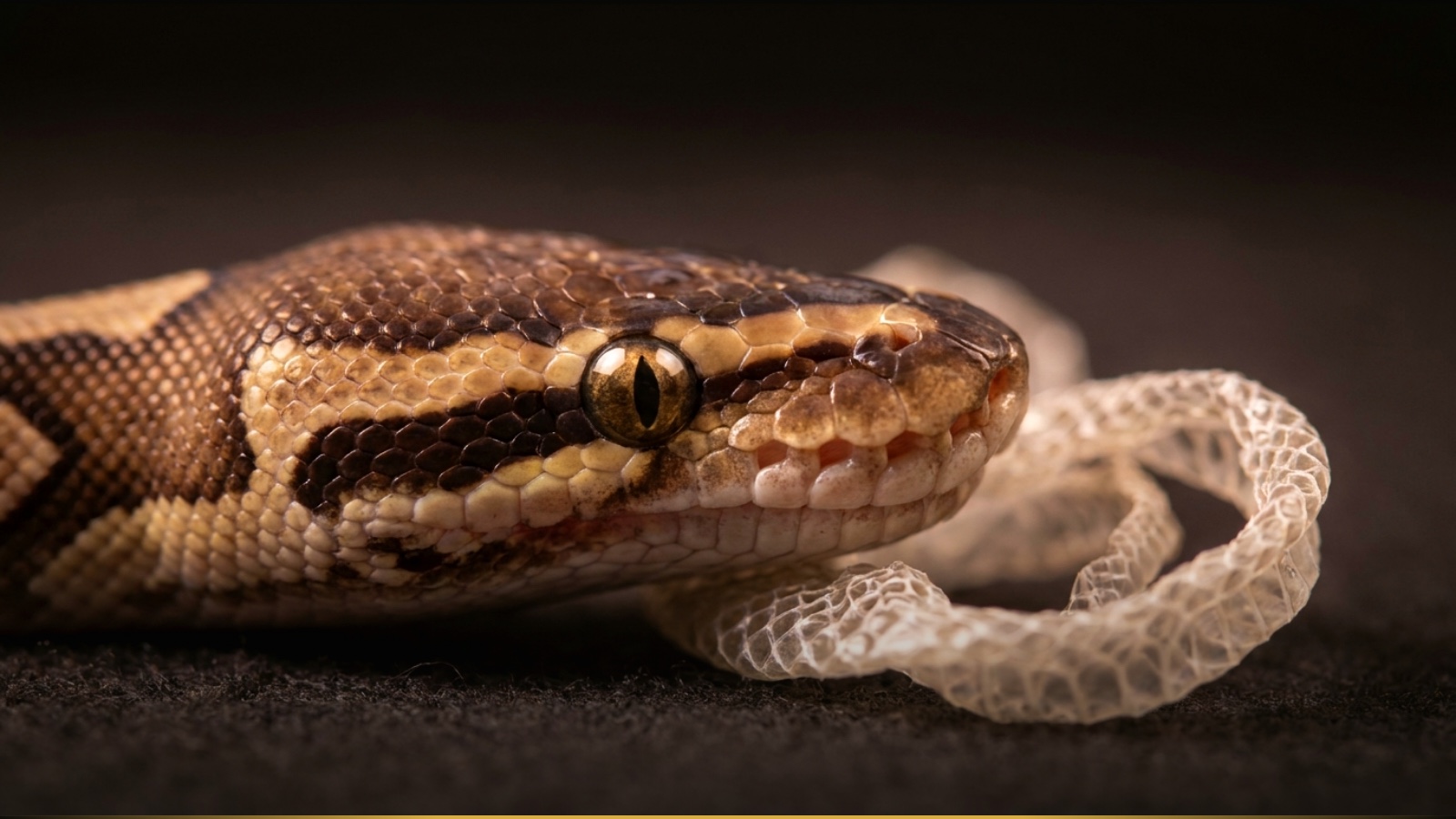
Signs of a healthy ball python
- Clear eyes, no swelling around the head, no retained eye caps after a shed.
- Clean nostrils, no bubbling, no mucus, no whistling sound when breathing.
- Good muscle tone. The animal should feel firm and substantial, not soft or hollow.
- Body shape is rounded and slightly oval in cross-section. Triangular cross-section (visible spine, flat sides) means underweight.
- Tongue flicking and head movement when alert.
- Clean vent (no smearing, no swelling).
- Smooth, complete sheds in one or two pieces.
- Stable weight in adults, steady gain in juveniles.
- Reasonable feeding response when not in seasonal fast or shed.
Common illnesses — early signs and prevention
Respiratory infection (RI)
- Early signs: faint clicking or whistling on exhale, occasional bubbles at the nostrils, slightly open mouth at rest, increased time spent at the warm hide.
- Late signs: visible mucus, wheezing, mouth held open, head held elevated, lethargy.
- Prevention: correct temperatures (the single biggest factor — cool side too cool is the most common cause), clean enclosure, low stress, full quarantine on new animals.
The rest of this chapter is in the full guide
Unlock The Ball Python Codex
You're reading the free preview. Unlock once and the entire book opens — every chapter, every section. 34 more sections are waiting in this chapter alone.
- Full husbandry: enclosure, heat & humidity, feeding, handling
- Health, parasites, and when to see a vet
- Morphs, genetics, and notable breeders
- Every appendix, glossary, and quick-reference card
What we guarantee: you will finish this understanding that there is more than one right way to keep a ball python, and knowing the reasoning under each one. You will ask sharper questions and notice things in your own animal you used to walk past.
One-time purchase · secure checkout by Gumroad