9
Breeding and Reproduction
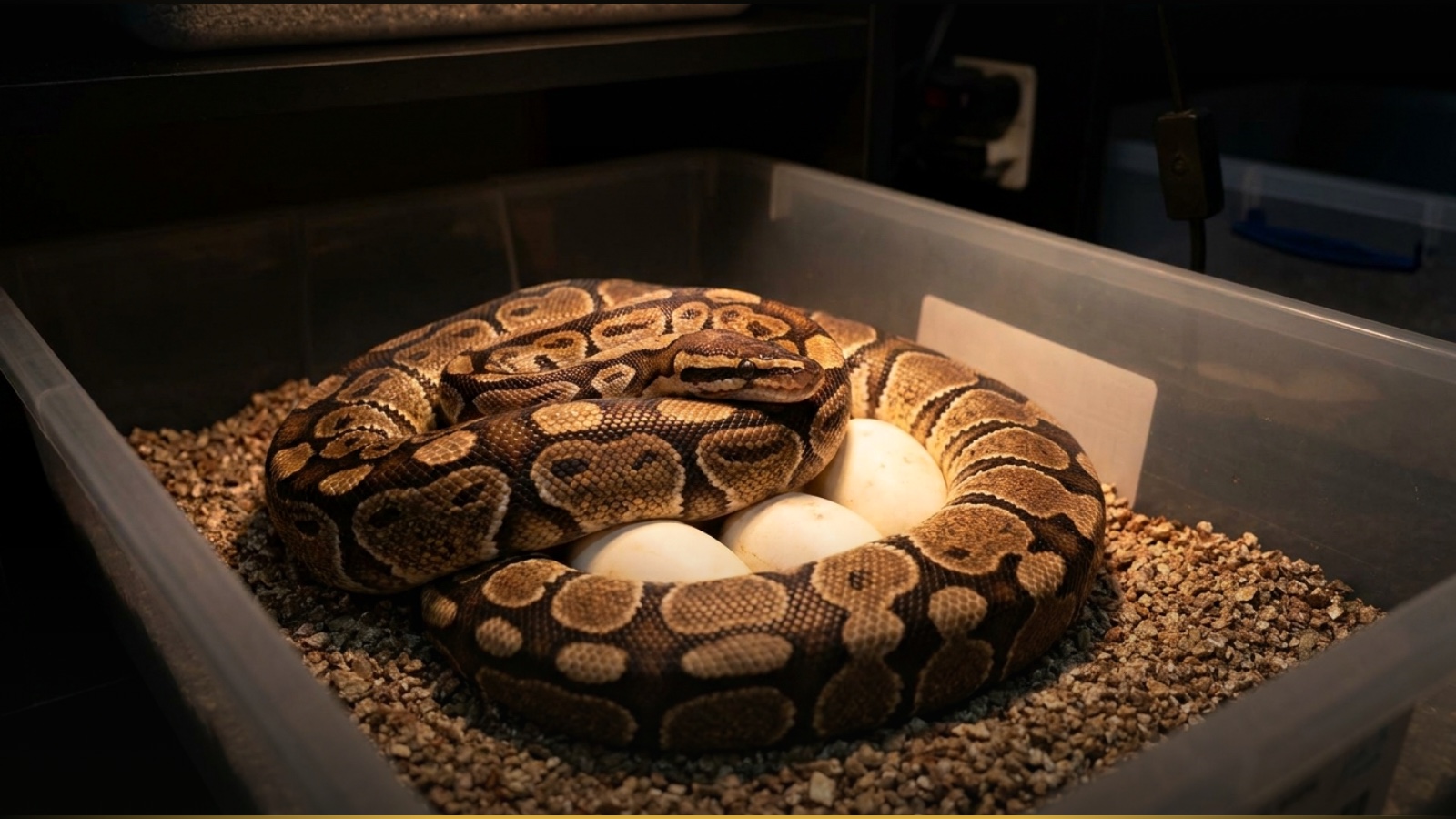
Most of this guide is about keeping one ball python well. This chapter is about making more of them. We put it after the genetics chapter on purpose: breeding is where genetics stops being trivia and starts being a plan.
Before anything else, a framing note. The everyday temperature and feeding numbers in Chapters 6 and 7 are for a pet ball python living its normal year. Breeding deliberately departs from them — a seasonal cool-down, a different feeding rhythm, and a set of temperature cues you would never impose on a pet you were not trying to breed. When this chapter gives a number, it is a breeding-season number. Do not apply it to a non-breeding animal.
Should you breed at all?
There are two honest reasons to breed. The first is to reproduce a combination you admire — you saw an animal, you wanted to make one. The second, and the one that drives most serious breeders, is to make something that does not exist yet: take a sire with these genes and a dam with those genes and find out what the combination looks like. Both are legitimate.
The reason that is not good enough on its own is money. The ball python market rewards novelty and punishes the common, and as the genetics chapter noted, prices on a given combo fall as it becomes widely available. …
The rest of this chapter is in the full guide
Unlock The Ball Python Codex
You're reading the free preview. Unlock once and the entire book opens — every chapter, every section. 33 more sections are waiting in this chapter alone.
- Full husbandry: enclosure, heat & humidity, feeding, handling
- Health, parasites, and when to see a vet
- Morphs, genetics, and notable breeders
- Every appendix, glossary, and quick-reference card
What we guarantee: you will finish this understanding that there is more than one right way to keep a ball python, and knowing the reasoning under each one. You will ask sharper questions and notice things in your own animal you used to walk past.
One-time purchase · secure checkout by Gumroad