Citadel Culebra
CinemaPages
Get the guide · $9.99

7

Feeding

This is the section that drives more 2 a.m. anxiety than any other. Ball pythons have the most theatrical feeding-refusal behavior of any commonly kept snake. Most of it is normal. Most of it is not an emergency. We will tell you what is.

What to feed

  • Adults: rats, frozen-thawed. A weaned-rat-to-small-rat sized prey item is appropriate for the average adult; large adult females may take medium rats.
  • Hatchlings and juveniles: hopper to weanling mice for the smallest snakes, transitioning to rat fuzzies and pups as they grow.
  • Single-prey adequacy: ball pythons are rodent specialists and do not need dietary variety. A snake that eats only rats its entire life is not malnourished.

Rats vs. mice — the bodybuilder analogy

Different snake species do best on different prey because their body types differ. Ball pythons and large constrictors are the bodybuilders of the snake world — high-protein, lower-fat diets produce the best long-term body composition for them. Mice are higher fat and lower protein than rats, which is fine for endurance-runner snakes like cornsnakes and kingsnakes but produces a less optimal body composition in adult ball pythons over time. Rats hit the protein-to-fat ratio adult ball pythons actually need.

Practically: an adult ball python fed exclusively on mice will need several mice per meal to match the nutrition of a single appropriately-sized rat, which is harder on you, harder on the snake, and runs a less efficient feeding cycle. The transition from mice to rats is one of the more important moves in the snake's first year — we cover transition techniques later in this section.

On taking another life to feed our snakes

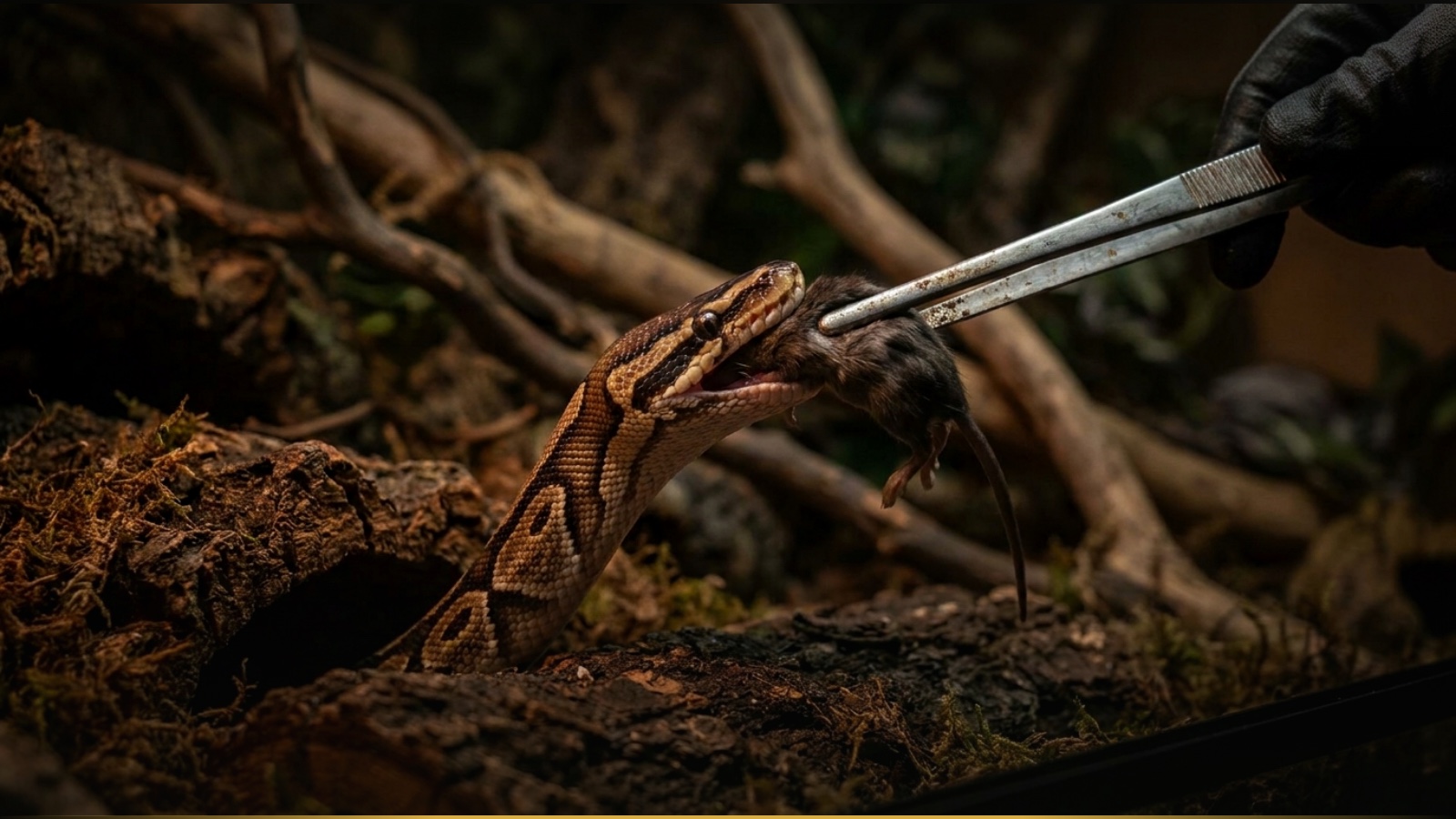
Before we get into the mechanics of feeding, we want to say something about what feeding actually is. A rodent dies so a snake can eat. That is the trade we participate in when we keep a constrictor or a python.

We do not take joy in this. We have never met a serious keeper who does. The good ones treat feeder rodents with the same respect they treat any other animal in their care — housed humanely while alive, dispatched quickly and properly, never tortured for content or entertainment. The keepers who film themselves cackling over a feeding response, who hand-feed live prey to make videos, who treat the rodent as comic relief — those are not the keepers we want representing this hobby. We say that plainly.

At the same time, we do not pretend the trade is something it is not. As humans, almost all of us participate in animal death every day. The hamburger, the steak, the chicken nugget, the bacon — every one of those is an animal that lived and died so a person could eat. The snake is not different. The trade with feeder rodents is more visible than the one happening in industrial slaughterhouses, but it is the same kind of trade, on a far smaller scale, and frankly with far higher animal-welfare standards in most cases. A rodent raised by a reputable feeder breeder lives a better life than most farmed chickens ever do.

Snakes also exist for a reason. In their native ecosystems, ball pythons are predators of rodents and small mammals — part of a food web that has been functioning for millions of years before humans built care guides about it. In West Africa, ball pythons help control rodent populations that would otherwise damage crops and spread disease. They feed raptors, monitor lizards, and other predators above them. Take the snakes out of that picture and the system breaks. Every life in that food web matters — the rodent, the snake, the hawk — and respecting one means respecting all of them.

When you feed your snake, you are participating in something that has happened in nature billions of times, with the difference that you have removed the chase, removed the prolonged stress of ambush, and (in the case of frozen-thawed prey, which we strongly prefer) removed the suffering of the kill itself. We think that is the most ethical way to do this, and it is how we approach feeding at Citadel Culebra.

Live versus frozen-thawed — we are not proponents of live feeding

Citadel Culebra is not a proponent of live feeding. We will say that as plainly as we know how. There are circumstances where it becomes necessary — a snake on a long fast that has refused everything else, a true problem feeder that genuinely cannot be transitioned, an animal in a rescue context with feeding history we did not control. Those cases exist. But we do not consider live feeding a normal default, and we encourage every keeper to work toward frozen-thawed as the standard.

Why we feel this way:

  • Welfare of the prey animal. A frozen-thawed rodent was dispatched quickly and humanely (typically with CO2 in commercial production) before freezing. A live rodent dropped into an enclosure faces an extended ambush, the chase, the strike, and the constriction. The animal is fully aware throughout. If we are going to take the rodent's life, doing it quickly off-site is the kindest path.
  • Safety of the snake. Live rodents fight back. Rats in particular have powerful jaws and will bite a hesitant snake on the face, body, or eyes. We have seen severe wounds, infections, and deaths in keepers' collections from live-feeding incidents. There is no reward worth that risk.
  • Convenience and consistency. Frozen-thawed prey is easier to source, easier to store, and lets you control prey size, species, and feeding schedule precisely. Most major U.S. and international breeders feed exclusively frozen-thawed for these reasons alone.
  • Public perception of the hobby. Every viral video of someone feeding live to make their snake “look cool” is ammunition for people who want to legislate this hobby into the ground. We have a responsibility to each other, not just to our individual animals.

The rest of this chapter is in the full guide

Unlock The Ball Python — Complete Care Guide

You're reading the free preview. Unlock once and the entire book opens — every chapter, every section. 57 more sections are waiting in this chapter alone.

  • Full husbandry: enclosure, heat & humidity, feeding, handling
  • Health, parasites, and when to see a vet
  • Morphs, genetics, and notable breeders
  • Every appendix, glossary, and quick-reference card

One-time purchase · secure checkout by Gumroad